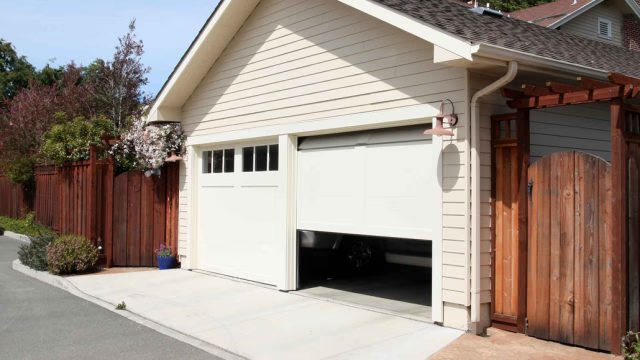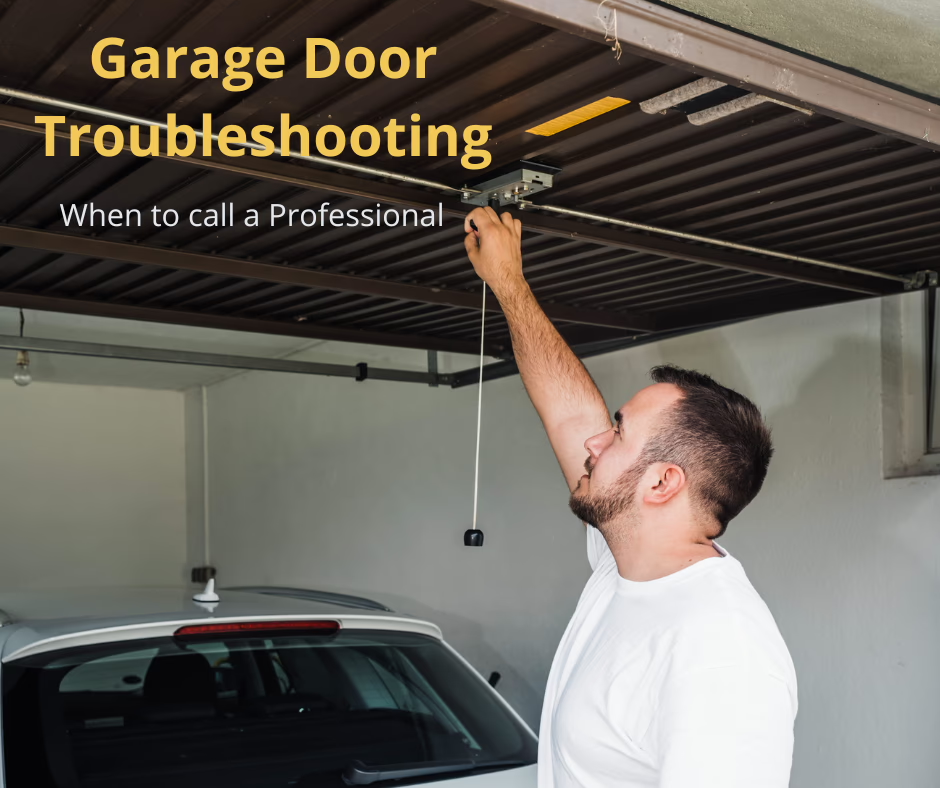

Your garage door sensors are like tiny, judgmental bouncers standing at the entrance of your garage nightclub. Their only job is to say: “Stop! Something is in the way!” When they work, you never notice them. When they don’t, your garage door behaves like a stubborn toddler who refuses to cooperate. Understanding how to repair garage door sensor issues can save you time, stress, and possibly a bruised ego after arguing with a door that won’t close.
What garage door sensors actually are
Most modern garage doors use a photoelectric safety system made of two small devices placed on either side of the garage opening, usually near the floor. One sensor sends an invisible infrared beam, and the other receives it. If anything blocks that beam – your car, a trash can, your dog, or a dramatic spider web – the door stops or reverses.
Think of them as the garage’s nervous system. When everything is aligned, the system is calm. When something is off, your garage starts acting like it drank too much coffee.
Why sensors fail more often than you think
Sensors rarely “die” in a dramatic way. Instead, they get annoyed by small problems:
- A tiny bump from a broom
- Dust, dirt, or spider webs on the lenses
- Sunlight directly hitting the receiver
- Loose wiring
- Slight misalignment
- A child deciding the sensor looks like a toy
Most of the time, the issue is mechanical or environmental rather than electrical. That’s good news, because it means many problems are fixable without replacing the whole system.
Step one – don’t panic, just observe
Before grabbing tools, take a look at your sensors. Are both lights on? Usually one sensor has a steady light, and the other blinks. If one is completely dark, you may have a power issue. If one is blinking rapidly, alignment is likely the culprit.
If your garage door opener beeps, flashes, or refuses to close, the sensors are almost certainly involved.
Step two – clean like a civilized adult
Dirt is the number one silent killer of garage door sensors. Take a soft cloth and gently wipe both lenses. No chemicals, no sprays, no dramatic wiping like you’re polishing a luxury car.
If you’ve never cleaned them before, you might be shocked by how much dust has accumulated. Spiders especially love these spots because they’re warm, quiet, and close to food sources. Your garage door is basically a spider resort.
Step three – check alignment like a sniper
Even a slight misalignment can break the infrared beam. Look at the sensors from the front. They should face each other perfectly.
Try gently nudging one sensor a millimeter at a time until both lights become steady. When alignment is correct, the blinking usually stops. This is the most common “repair” homeowners perform.
If you need to tighten them, use a screwdriver, but don’t overtighten – these brackets are often plastic.
Step four – inspect the wires (carefully)
Follow the wires from the sensors to the garage door opener. Look for:
- Chewed insulation (thanks, mice)
- Pinched cables
- Loose connections
- Wires pulled out of terminals
If a wire is damaged, you may need to splice it or replace the section. At this point, many people realize that cheap garage door repair Calgary services might be a better idea than becoming an amateur electrician.
Step five – battle with sunlight
Direct sunlight can blind the receiving sensor, especially in the early morning or late afternoon. If your garage faces east or west, this is a classic problem.
A simple trick is to place a small cardboard shield above the sensor to block direct rays. It’s not glamorous, but it works more often than you’d expect.
Step six – test the door like a scientist
After cleaning and aligning, press the garage door button. If it closes smoothly, congratulations – you are now a certified sensor whisperer.
If it still refuses, try this:
- Unplug the opener for 30 seconds
- Plug it back in
- Try again
Sometimes a simple reset clears minor electronic glitches.
When DIY turns into “call a professional”
There are moments when home repairs stop being charming and start being risky:
- If the sensors have no lights at all
- If the wiring inside the wall is damaged
- If your opener shows error codes you don’t understand
- If the door starts acting unpredictable
At this stage, calling WinCal Garage Doors makes more sense than spending hours crawling around your garage floor like a confused mechanic.
Professionals don’t just fix sensors – they diagnose the entire system: opener, tracks, springs, rollers, and safety mechanisms.
DIY vs professional repair – the honest truth
DIY is great for:
- Cleaning
- Minor alignment
- Basic troubleshooting
Professional service is better for:
- Electrical faults
- Damaged cables
- Sensor replacement
- System recalibration
A trained technician has tools and experience that prevent accidental damage to your garage door system.
How much this usually costs in Calgary
Prices vary, but simple sensor repairs are typically among the cheaper garage door services. Many companies offer inspection fees that may be waived if you proceed with repairs.
Instead of guessing, you get a clear diagnosis, proper alignment, and a guarantee that everything meets safety standards.
How to prevent future sensor problems
Prevention is easier than repair:
- Wipe sensors every few months
- Avoid leaning objects against them
- Keep the garage clean
- Check alignment after heavy winds or accidental bumps
- Make sure pets don’t treat sensors like chew toys
A little maintenance goes a long way.
Why safety matters more than convenience
Garage door sensors aren’t optional gadgets – they are safety devices designed to prevent accidents, especially with children and pets.
A malfunctioning sensor can allow the door to close on objects or people, which is dangerous. Fixing them properly is not just about convenience, but about protecting what matters most.
Why WinCal Garage Doors exists
Companies like WinCal Garage Doors specialize in making garage doors reliable, quiet, and safe. They see broken sensors every week, so they know exactly what to look for in seconds.
Instead of guessing, you get professional clarity, faster repairs, and peace of mind.
Final thoughts – be smart, not stubborn
Repairing garage door sensors can be simple or surprisingly complex. Start with cleaning and alignment, but don’t be afraid to call experts when things get tricky.
Your garage door is not a toy, and your time is valuable. Sometimes the smartest move is letting professionals handle it while you enjoy a stress-free, perfectly working door.