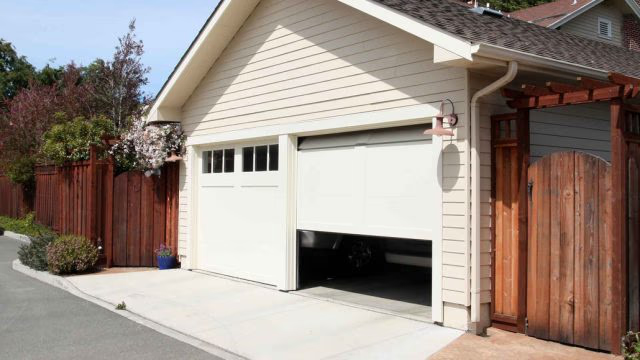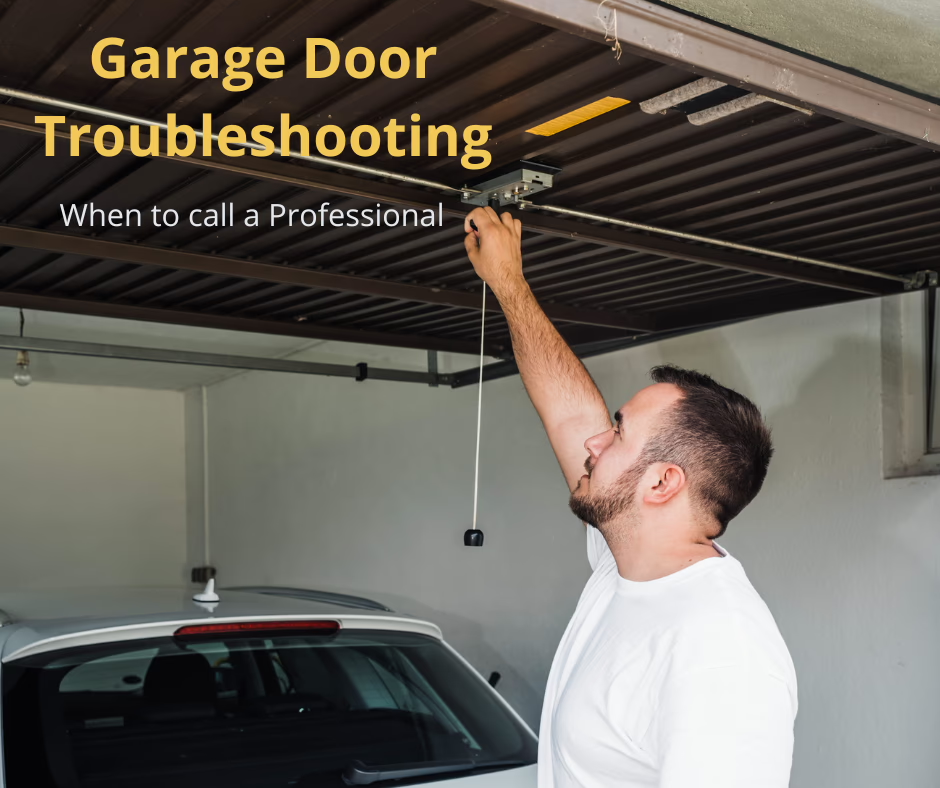

An overhead garage door is one of those things you barely notice… until it stops working. Then suddenly, it becomes the most dramatic object in your entire house. It refuses to open, slams shut like it’s offended, or makes sounds that belong in a horror movie.
Before you grab a wrench and declare war on it, let’s break this down calmly and intelligently. Fixing an overhead garage door is often possible — but not always wise. In many cases, a professional service like WinCal Garage Doors will save you time, money, and possibly a trip to the emergency room.
Let’s look at what’s really going on behind that big metal curtain.
Understanding How an Overhead Garage Door Actually Works – It’s Not Just “A Door”
An overhead garage door is a balanced mechanical system. It may look simple, but it includes:
– Torsion or extension springs
– Cables and drums
– Rollers and tracks
– Hinges
– An opener with motor and drive system
– Safety sensors
The entire system works because of counterbalance. Springs carry most of the door’s weight, allowing you (or the opener) to lift something that can weigh 150 to 300 pounds with minimal effort.
If one component fails, everything feels wrong. The door becomes heavy, crooked, noisy, or stuck halfway like it’s thinking about its life choices.
Understanding which part is misbehaving is the first step to fixing it properly.
Step 1 – Check the Obvious Before Assuming Disaster
Before you assume catastrophic failure, inspect the basics.
– Is the opener plugged in?
– Did the circuit breaker trip?
– Is the remote battery dead?
– Are the safety sensors blocked or misaligned?
Safety sensors are small photo-eyes located near the bottom of the tracks. If they don’t “see” each other, the door won’t close. A spider web or a slightly bumped bracket can cause the problem.
Sometimes the fix is as simple as cleaning the lens or tightening a screw. Start simple. Always.
Step 2 – Inspect the Tracks and Rollers – Smooth Movement Matters
If your door is jerky, crooked, or noisy, the issue may be mechanical friction.
Look for:
– Bent tracks
– Loose mounting brackets
– Worn or cracked rollers
– Debris inside the track
Tracks should be parallel and securely mounted. Rollers should spin freely. If you see severe bending or structural misalignment, do not attempt to force it back into place with brute strength. That approach rarely ends well.
Minor tightening and lubrication with proper garage door lubricant can solve small issues. But if the door is visibly off-track, that’s a professional-level repair.
Step 3 – Broken Springs – The Most Common and Most Dangerous Problem
If the door suddenly feels extremely heavy or won’t lift more than a few inches, there’s a strong chance a spring is broken.
You might even hear a loud bang when it snaps — many homeowners describe it as a gunshot sound in the garage.
Here’s the important part:
Garage door springs are under extreme tension. Attempting to replace or adjust them without proper tools and training is genuinely dangerous.
This is where DIY confidence should politely step aside. Spring repair is not a YouTube experiment. It’s a controlled mechanical procedure that professionals perform with specialized winding bars and safety protocols.
WinCal Garage Doors handles spring replacement safely and efficiently, restoring full balance to the system without risk to you or your property.
Step 4 – Check the Cables – Small Parts, Big Responsibility
Cables work together with springs to lift and lower the door evenly.
If one cable becomes loose, frayed, or slips off the drum:
– The door may hang unevenly
– One side may rise higher than the other
– The door may jam
Never try to reset a cable on a torsion system while the spring is under tension. That tension can snap back violently.
If you see visible cable damage, stop operating the door immediately and call for service.
Step 5 – Opener Problems – When the Motor Is the Culprit
Sometimes the door itself is fine. The opener might be the issue.
Common opener problems include:
– Worn drive gears
– Stripped trolley carriage
– Incorrect force settings
– Travel limit misalignment
If the motor runs but the door doesn’t move, you may have a disconnected trolley or a stripped internal gear.
Modern openers also have safety and force adjustments. If these are set incorrectly, the door may reverse unexpectedly or refuse to close.
Basic adjustments are possible if you follow the manufacturer’s manual carefully. However, electrical repairs or gear replacements are best left to trained technicians.
Step 6 – Lubrication and Preventive Maintenance – The Easiest Fix
Many garage door issues come down to neglect.
A simple annual maintenance routine includes:
– Lubricating rollers, hinges, and springs
– Tightening hardware
– Testing door balance
– Checking sensor alignment
– Inspecting weather seals
This small investment of time can extend the life of your entire system.
If you own an overhead door garage Calgary property and rely on it daily through freezing winters and temperature swings, regular maintenance is even more critical. Seasonal stress affects metal components more than most people realize.
Professional maintenance services ensure that small problems are caught before they turn into major repairs.
When You Should Absolutely Call the Professionals
There are situations where calling experts is not optional:
– Broken torsion springs
– Snapped cables
– Door off-track
– Structural panel damage
– Opener motor failure
– Repeated system imbalance
A garage door is the largest moving object in your home. Treating it casually can result in injury or further damage.
Professional technicians bring:
– Proper tools
– Correct replacement parts
– Experience diagnosing hidden issues
– Warranty-backed repairs
– Long-term reliability
In many cases, what looks like a “small fix” can escalate if handled incorrectly.
DIY vs Professional Repair – The Smart Decision
DIY can work for:
– Replacing remote batteries
– Cleaning sensors
– Light lubrication
– Tightening loose bolts
But when tension systems are involved, or when structural alignment is compromised, professional repair is simply the smarter move.
WinCal Garage Doors doesn’t just fix the visible issue. They evaluate the full system — springs, cables, balance, opener calibration — to ensure safe and smooth operation.
That means fewer repeat breakdowns and fewer surprises at the worst possible moment.
Final Thoughts – Respect the System
An overhead garage door is a powerful mechanical system designed to operate smoothly for years — when maintained properly.
Fixing minor issues yourself can be practical and satisfying. However, knowing where your limits are is the real mark of a smart homeowner.
If your door is making strange noises, moving unevenly, or refusing to cooperate, approach it with caution. Diagnose calmly. Handle small fixes confidently. And when the situation involves high tension or structural imbalance, let professionals handle it safely.
Because while a garage door may seem like just another part of the house… it has far more strength behind it than most people expect.
And it always wins arguments with gravity.