
Adjusting garage door springs might look like a simple weekend project. After all, it’s “just a spring,” right? The kind you’d find in a pen… only about 100 times more powerful and capable of lifting a 200-pound door with ease.
If your garage door suddenly feels heavy, slams shut, refuses to stay open, or sounds like it’s auditioning for a horror movie soundtrack, the springs are usually the reason. In this guide, we’ll walk through how spring adjustment works, why it’s risky, and when it’s smarter (and cheaper in the long run) to call professionals like WinCal Garage Doors.
Let’s get into it.
Understanding How Garage Door Springs Actually Work – And Why They Matter
Garage doors are heavy. Even lightweight steel doors often weigh between 130 and 300 pounds. The only reason you can lift one with one hand (or why your opener doesn’t explode) is because of high-tension springs.
There are two main types:
- Torsion springs – mounted horizontally above the door
- Extension springs – installed along the horizontal tracks on each side
Torsion springs twist to store energy. Extension springs stretch to create counterbalance. Both systems are designed to offset the weight of the door so it feels nearly weightless.
When springs are properly adjusted:
- The door stays halfway open without falling
- It opens smoothly without jerking
- The opener doesn’t strain
- The door doesn’t slam shut
When they’re not adjusted correctly:
- The door feels unusually heavy
- It won’t stay open
- It closes too quickly
- You hear loud bangs (sometimes meaning a spring has snapped)
That “small” spring holds massive tension. That’s where things get serious.
Signs Your Overhead Garage Door Springs Need Adjustment
Before grabbing tools, first confirm the problem is actually spring tension and not something else.
Common signs include:
- Door won’t stay open halfway
- Door slams shut instead of gently closing
- Opener struggles or makes grinding sounds
- Visible gaps in torsion spring coils
- Uneven lifting (one side higher than the other)
If you’re noticing these issues with overhead garage doors Calgary homeowners often deal with similar seasonal changes – temperature fluctuations can affect metal tension and spring performance over time.
But here’s the key point: misdiagnosis leads to unnecessary risk. Springs aren’t always the issue. Cables, rollers, or tracks can create similar symptoms.
Tools Required – And Why This Is Not a Casual DIY
If adjusting torsion springs, you typically need:
- Solid steel winding bars (not screwdrivers)
- Vice grips or locking pliers
- Adjustable wrench
- Ladder
- Safety glasses
- Gloves
Important note – NEVER use random tools like screwdrivers instead of winding bars. That’s one of the most common causes of injury.
Extension springs require:
- Properly rated replacement springs
- Safety cables (mandatory)
- Wrenches
- Clamps
The average torsion spring stores enough torque to cause severe injury if released incorrectly. This is not a scare tactic. Emergency rooms see these injuries every year.
How to Adjust Torsion Springs – Step by Step Overview
This is purely educational. If you feel even slightly unsure at any step, stop and call a professional.
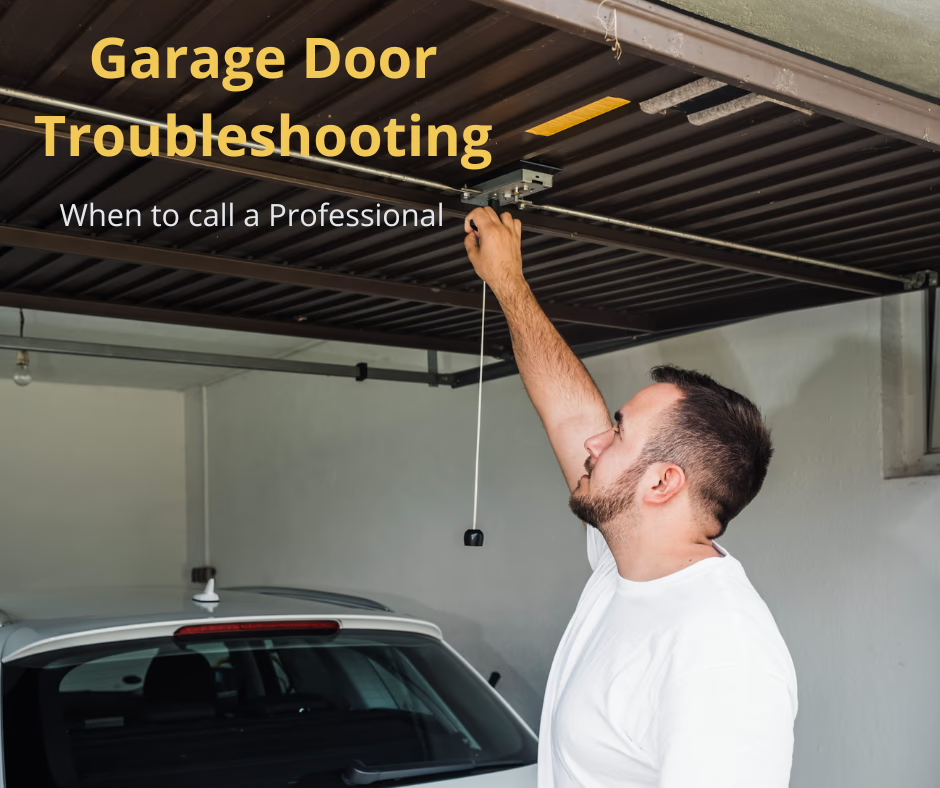
- Disconnect the opener – Pull the emergency release cord.
- Secure the door – Clamp locking pliers to the track so the door cannot move.
- Locate the winding cone – At the end of the torsion spring.
- Insert winding bar – Fully seat it into the winding cone.
- Loosen set screws – Carefully while holding tension with the bar.
- Add or remove tension – Typically 1/4 turn at a time.
- Tighten set screws – Secure them firmly.
- Test door balance – Remove clamps and lift manually.
Correct balance test:
- Door stays halfway open without moving.
If it drifts down – add tension.
If it rises up – reduce tension.
Now here’s the reality: each quarter turn changes force significantly. Over-adjustment can snap the spring or damage the shaft.
Professionals perform this process quickly because they understand torque distribution and door weight calculations. For homeowners, one mistake can cost more than the service call would have.
How to Adjust Extension Springs
Extension springs are slightly less dangerous than torsion systems but still risky.
Basic concept:
- Move the hook to a different hole in the track bracket to increase or decrease tension.
Steps:
- Open the door fully to release tension.
- Secure the door in open position.
- Detach spring hook.
- Move to a new hole for tension adjustment.
- Reattach and test balance.
Even here, uneven adjustments between left and right springs can cause crooked door operation and cable issues.
And if your extension springs lack safety cables – stop immediately. Modern safety standards require cables running through the spring to prevent it from becoming a projectile if it breaks.
The Hidden Costs of DIY Spring Adjustment
Let’s talk realistically.
A professional spring adjustment service is typically affordable compared to:
- Replacing a damaged opener
- Replacing bent tracks
- Emergency repairs after a snapped spring
- Medical bills
Additionally, springs wear in cycles. If one spring is failing, the second is likely close behind. Professionals often recommend replacing both at once for balanced performance and longevity.
WinCal Garage Doors handles these adjustments daily. Technicians inspect the entire system – not just the springs – ensuring cables, drums, rollers, and bearings are properly aligned and lubricated.
DIY often focuses on the symptom. Professionals fix the system.
Why Professional Adjustment Is Safer and Smarter
Here’s what pros bring to the table:
- Correct spring sizing based on door weight
- Precision torque adjustment
- Proper safety procedures
- System inspection beyond just springs
- Warranty protection
- Time efficiency
Most importantly – safety.
Garage doors are the largest moving object in most homes. Treating them casually is never wise.
Even strong, experienced homeowners underestimate torsion spring force. The tension is invisible but powerful. When released incorrectly, it happens instantly.
When You Should Definitely Call a Professional
Do not attempt DIY if:
- Spring is broken
- Door cables are loose or off drum
- Door is crooked or jammed
- You don’t have proper winding bars
- You feel uncertain at any step
Confidence is good. Overconfidence with high-tension steel is not.
Final Thoughts – Know When to DIY and When to Delegate
Understanding how garage door springs work is valuable knowledge. It helps you recognize problems early and communicate clearly with technicians.
But adjustment is not the same as tightening a loose screw. It involves calculated force management under high tension.
If you want your garage door operating smoothly, quietly, and safely for years to come, working with experienced professionals like WinCal Garage Doors is the most reliable approach.
A properly balanced garage door protects your opener, extends system lifespan, and most importantly – keeps your household safe.
Sometimes the smartest home improvement decision is knowing when to put the tools down.
And when it comes to overhead garage door springs, that decision can make all the difference.